
The interest rate you secure when buying your home impacts more than just your monthly mortgage payment. The higher the rate, the more money you will pay for your home over the course of your loan. Let’s get together to discuss how to get you in your dream home at today’s historically low rates! Next
Category: Selling a home
3 Things You Need in a Shifting Real Estate Market
Thursday January 24th, 2019

Whether you are thinking of selling your house or buying a home, today’s real estate headlines can be confusing – perhaps even concerning. What is actually happening with mortgage rates? Are home values dropping or are they just rising at a slower pace? What impact will the economy have on the housing market?
If you are either a buyer or seller (or both), you need to know what it will mean to your family if you go ahead with the move. You need to understand three things:
1. What is happening in the housing market right now?
Consumers must get past those fear-mongering headlines and gain a deep understanding of what is truly happening. How strong is buyer demand right now? How much competition do listings have today compared to what they will have in the spring? People want to make an educated decision on what is probably their family’s greatest financial asset.
2. Why is it happening?
Understanding the individual pieces that impact the sale or purchase of real estate is important. Understanding how those pieces impact each other is critical. How does the amount of a down payment impact the mortgage rate a buyer will be offered? Can you still price your house a ‘little ahead’ of the market and still be sure it will sell?
3. How do the first two affect your local market?
Basically, you want an understanding of the overall housing market and a simple and effective explanation of how it will impact your personal real estate goals.
Bottom Line
The best way to get all three is to work with a professional who understands this shifting real estate market and can expertly guide you on the journey to reach your housing goals. Let’s get together to discuss what today’s market means for you.
7 Factors to Consider When Choosing A Home to Retire In

As more and more baby boomers enter retirement age, the question of whether or not to sell their homes and move will become a hot topic. In today’s housing market climate, with low available inventory in the starter and trade-up home categories, it makes sense to evaluate your home’s ability to adapt to your needs in retirement.
According to the National Association of Exclusive Buyers Agents (NAEBA), there are 7 factors that you should consider when choosing your retirement home.
1. Affordability
“It may be easy enough to purchase your home today but think long-term about your monthly costs. Account for property taxes, insurance, HOA fees, utilities – all the things that will be due whether or not you have a mortgage on the property.”
Would moving to a complex with homeowner association fees actually be cheaper than having to hire all the contractors you would need to maintain your home, lawn, etc.? Would your taxes go down significantly if you relocated? What is your monthly income going to be like in retirement?
2. Equity
“If you have equity in your current home, you may be able to apply it to the purchase of your next home. Maintaining a healthy amount of home equity gives you a source of emergency funds to tap, via a home equity loan or reverse mortgage.”
The equity you have in your current home may be enough to purchase your retirement home with little to no mortgage. Homeowners in the US gained an average of over $14,000 in equity last year.
3. Maintenance
“As we age, our tolerance for cleaning gutters, raking leaves and shoveling snow can go right out the window. A condominium with low-maintenance needs can be a literal lifesaver, if your health or physical abilities decline.”
As we mentioned earlier, would a condo with an HOA fee be worth the added peace of mind of not having to do the maintenance work yourself?
4. Security
“Elderly homeowners can be targets for scams or break-ins. Living in a home with security features, such as a manned gate house, resident-only access and a security system can bring peace of mind.”
As scary as that thought may be, any additional security and an extra set of eyes looking out for you always adds to peace of mind.
5. Pets
“Renting won’t do if the dog can’t come too! The companionship of pets can provide emotional and physical benefits.”
Evaluate all of your options when it comes to bringing your ‘furever’ friend with you to a new home. Will there be necessary additional deposits if you are renting or in a condo? Is the backyard fenced in? How far are you from your favorite veterinarian?
6. Mobility
“No one wants to picture themselves in a wheelchair or a walker, but the home layout must be able to accommodate limited mobility.”
Sixty is the new 40, right? People are living longer and are more active in retirement, but that doesn’t mean that down the road you won’t need your home to be more accessible. Installing handrails and making sure your hallways and doorways are wide enough may be a good reason to look for a home that was built to accommodate these needs.
7. Convenience
“Is the new home close to the golf course, or to shopping and dining? Do you have amenities within easy walking distance? This can add to home value!”
How close are you to your children and grandchildren? Would relocating to a new area make visits with family easier or more frequent? Beyond being close to your favorite stores and restaurants, there are a lot of factors to consider.
Bottom Line
When it comes to your forever home, evaluating your current house for its ability to adapt with you as you age can be the first step to guaranteeing your comfort in retirement. If after considering all these factors you find yourself curious about your options, let’s get together to evaluate your ability to sell your house in today’s market and get you into your dream retirement home!
Maximize Your Profit When Selling Your Home By Avoiding a Fundamental Mistake!
I was just out to breakfast today with my wife Jen, at Gina’s. (the best place in Fairview Park to eat breakfast) I couldn’t help but overhear the conversation at the table next to us, they said that they were going to wait until spring to sell their house. This made me pause.
That is such a big mistake and I thought you should know why, in case you’re thinking of doing this yourself.
If you wait until springtime to sell your home, and by springtime, I mean April, May, or June, you’re going to be putting your home on the market at a bad time. Typically spring time will have a lot of homes you will need to compete against as well as new construction. When buyers have a lot to choose from they can become anxious and hesitant.
The best way to look at this situation is like supply and demand. Think about housing just like anything else: it’s an asset. In supply and demand, if there are more assets available, the price is going to be less. If there are few assets available, the prices go up. Adding your house to a market already saturated with homes on the “supply” side will only make it harder to sell. The best thing to do is to market your home with less competition on the market.
Our market in the Cleveland area is driven by first time home buyers. They buy a house when they are ready to buy a house. That’s just how it works. They do not normally wait for spring.” They save their money and get at it as soon as they can. Last year in the first few months buyers were willing to get into a bidding war because inventory’s were low, as inventory’s grew they were more likely to just move on to the next one.
So, do them and you a favor and stop waiting until Spring!
We cover all of these things in my book, so if you’d like a copy of it, feel free to send me an email or comment down below. I’d be happy to get it out to you!
Have a great day and I hope you enjoy the weather! It’s hasn’t been too bad lately, at least for January in Cleveland.
I look forward to hearing from you!
The Best Time to List Your House? TODAY!

You may have heard that the housing market is softening. There is no doubt that buyer traffic has decreased. There are fewer purchasers in the market than there were last month and at this time last year. What you may not have heard, however, is that there is still a severe shortage of listing inventory in many regions of the country.
In a recent interview discussing the housing market, First American’s Chief Economist Mark Fleming put it simply:
“The biggest challenge is really the availability of supply.”
When we look at available inventory numbers released by the National Association of Realtors (NAR), we see that the actual number of homes for sale has decreased in each of the last five months.
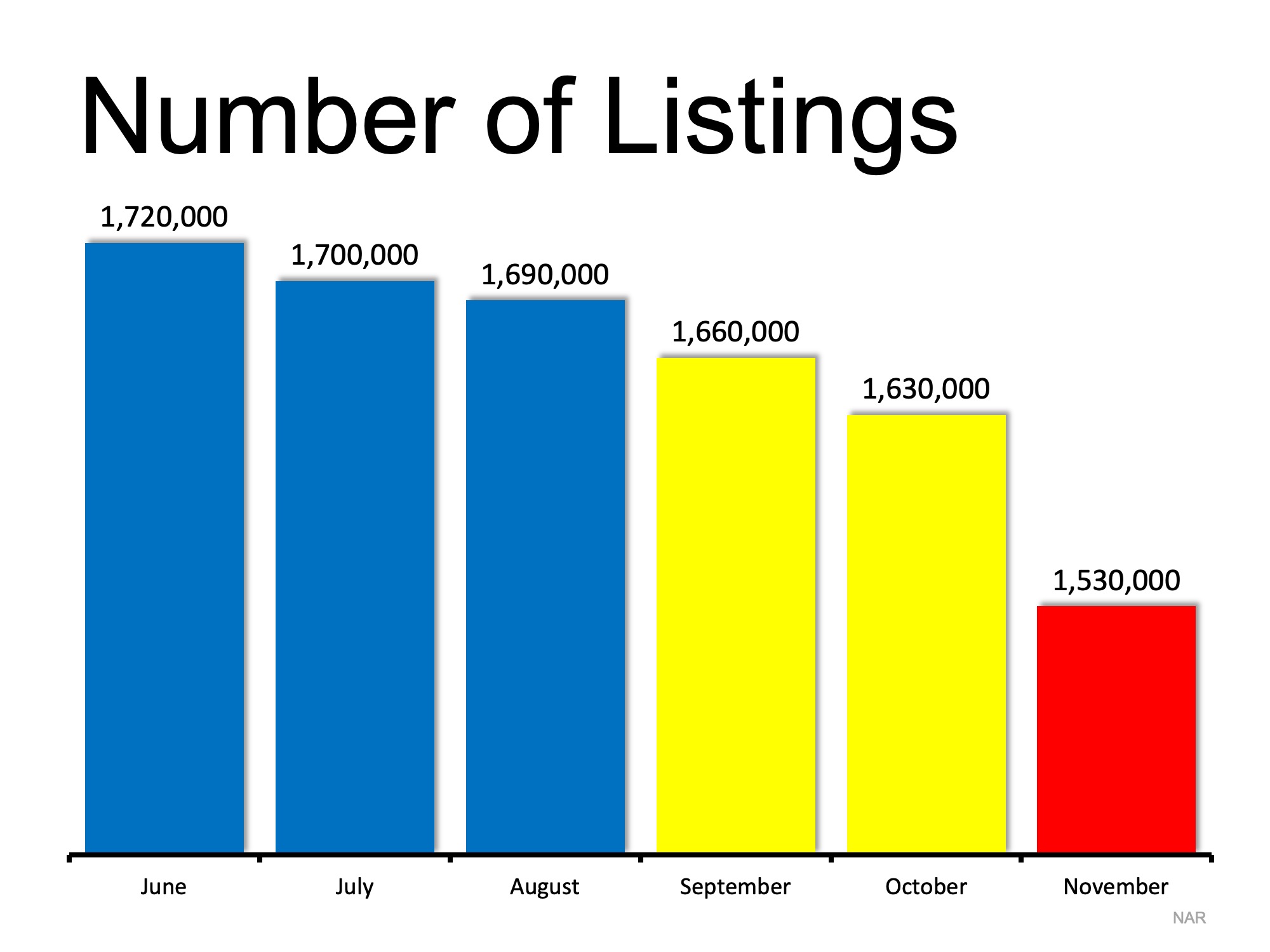
What does this mean to you as a seller?
The best time to sell is when there is less competition. That guarantees you a better price and fewer hassles in the transaction.
Bottom Line
If you are thinking of selling your house this year, the best time to put it on the market might be right now. Let’s get together to evaluate the demand for your house in our market!
The Reasons That Homes Fail to Sell Even In A great Market!
The Reasons That Homes Fail to Sell
I gotta talk to you. I was just out to lunch and I got asked a question for the second time today, so I figured you may be asking it, too.
The question was: Why didn’t my house sell? The market is good, so why didn’t it sell?
Well, they were right. The market is good right now. But that doesn’t mean your house will be automatically sold. There are actually only a few reasons that homes fail to sell, so let’s take a look at them.
Reason #1: Your house isn’t priced to sell.
You may have heard me talk about this before. A real estate agent will list your home at a price way over what it’s worth just to get you to sign a 6-month contract. Then they slowly reduce the price until you’ve missed your honeymoon period. This is called buying the listing and should be avoided at all costs. Also, some agents will show up with a comparative market analysis and price for your home already in mind. If they do this, just run! Or listen and check out, just like my house does when I’m listening.
Reason #2: You hired the wrong agent or brokerage.
This may be one of the biggest mistakes you could make when selling your home. Don’t just hire an agent because you see their signs all over town. What if all those signs don’t mean that they’re good at their job, but have a lot of houses listed that they can’t sell? I used to work exclusively with expired listings when I first started in this business and I saw a lot of things go wrong. If you hired a discount brokerage, or even brokerage who assigned a new agent to your case, it is common to see your home listed wrong on the MLS. I have seen homes listed completely in the wrong area. Make sure to interview multiple agents before you hire one or try to hire a broker directly because they have more education and higher stakes in the game.
Reason #3: You’re not marketing enough.
This isn’t always your fault. Sometimes, larger brokerages have a set pattern that they don’t stray from when it comes to marketing houses. They may not do Facebook ads, share it on social media at all, or keep your listing up to date on all websites where people are looking for houses. I’ve even seen some realtors not use Zillow just because they don’t like it, even though 9 out of 10 people say they use Zillow to look for homes. If you’re having trouble with your home’s marketing, you have to hold the agent’s feet to the floor and make sure they get it done.
Reason #4: You didn’t have professional pictures taken.
You’ve probably heard me say this before, but you NEED to have a professional photographer take pictures of your home. You just do. In today’s market, you can’t afford not to use a professional photographer. You know that if you heard the story about the expired listing of the house over in North Olmstead where the agent took pictures of a $200,000 home with her iPhone. You just can’t do it. Take my word for it.
Reason #5: Your home is not in good condition.
The market is moving right now, but it’s only certain price ranges and only house that are in the top level of that price range. If there are 10 houses on the market, you need your house to better than all 10 in order to sell it. That means beds have to be made, dishes have to be done, and everything should be neat and tidy. You don’t want to have a messy home when trying to sell your house, especially if a viewing is taking place. What potential buyers see can impact their final decisions more than you know.
So, price your house to sell, interview multiple agents, market your home, take professional photos, and make sure it is in good condition if you want your home to sell! Don’t make fundamental mistakes, which you can read more about in my book!
If you have any questions, let me know in the comments below or shoot me an email.
Good luck and have a great day!
Don’t Just Hire Any Real Estate Broker (Even if They Are Your Family)
I’ve seen it time and time again. People want to list their house for sale. They see a yard sign in a neighborhood and call that agent up, ready to list their house- all without doing any research!
Instead of looking up their options and familiarizing themselves with the process, they decide to just dive headfirst into selling their home. Not doing any research and hiring the first real estate broker you see is not something I recommend.
In fact, I recently had a client who had a bad experience with trying to sell his house before he came to me. He listed his house with a relative of his, his sister-in-law, because he was expected to. He didn’t even consider any other real estate brokers.
Don’t get me wrong, I understand the situation. Being a part of a family myself, I know how families can be and how awkward Christmas could get. But, there is one thing he could have done that could have made his situation better: research.
You Have to Do Your Research
Research can help you in numerous ways when choosing a real estate broker to list your house. First, it helps you understand what you are getting into. Second, it helps you develop some expectations of your real estate broker and the process. Lastly, it helps you make decisions that are best for you.
This is a Business Decision on Your Part
You’re handing over $10-20,000 of your equity when choosing a real estate broker. That’s more than some people make in a year! If you were spending this kind of money on a car or another large purchase, you wouldn’t go into it without doing research on what you’re buying. The same goes for your real estate broker. Do your research and form some expectations before sitting down with your broker. You don’t want to just give into someone else’s expectations with money on the line.
The same goes even if your real estate broker is a relative. Do some research before you sit down with them by interviewing a few other brokers. Then, talk to your relative and ask them questions. Make sure to tell them exactly what you want up front. Even if you hire your relative to sell your house, doing your research will put everyone on an even keel.
You Don’t Have to Hire Them Because They Are Your Relative
My parents were very generous, but they never said, “Hey, here’s $15,000 just for being our sixth kid!” The same goes for hiring a relative to sell your house. Let your relative know you understand the situation and that you have certain expectations that you are going to hold them to.
If you do this and go into it with your eyes wide open, you’ll have more luck than my client who hired his sister-in-law!
Do you have a question? Let me know! Leave it in the comments or send me a message. I’d be happy to answer it!
Have your home Pre-inspected before selling
Having your home pre-inspected is one of the most important things you can do in the selling process and is something I highly recommend to all of my clients. It can save you time, money, and worry. Just take it from one of my previous clients.
My client decided to list their home without doing a pre-inspection. Once a buyer came up and had an inspection done, there was a small punch list of items that needed repairing. There were things like reverse polarity on some plugs, GFCI that didn’t work in the bathroom, and it was noted that the hot water tank was getting towards the end of its life expectancy. The list of repairs didn’t seem so bad so, no big deal, right?
Wrong. The buyer ending up coming back and wanted $5,000 from the seller just for the hot water tank. The back and forth and negotiating that took place after this could have all been avoided all together if the seller had done a pre-inspection.
Save Your Time
Just like my client, you could just list your house for sale and let the buyer do the home inspection when they come along, but then you run the risk of small repairs turning into large ones as the contractor has to substantiate his fees and more. Not only will you pay more, but it will take longer to finish the sale. Wouldn’t you rather knock it out before things get too far along?
We have also found that of all the houses that have been pre-inspected, 60% of buyers aren’t even doing their own inspection. They take your inspection, review it, and see that the repairs are made without even hiring their own contractor. Isn’t it worth the investment of a pre-inspection if that means the deal will move forward even quicker?
Save More Money
When you have your home pre-inspected by a reputable company, it will cost you anywhere from $350-450, depending on the size of your house. If we’re selling your home for $250,000, that’s small potatoes. When you put the inspection in the buyer’s hands, you have no control over who does the inspection. And if they choose a company that isn’t reputable, you could be overcharged or even told to repair things that don’t even need fixing.
Save Yourself the Hassle
In the end, having your home pre-inspected before you sell it will provide you with a peace of mind. You won’t have to worry about any large repairs coming out of nowhere or other costly problems. By having your home pre-inspected, you will know exactly what to expect and will be able to move forward with the deal sooner rather than later.
Trust me. Doing a pre-inspection of your home before you list it for sale is the best thing you could do. If you have any questions, leave it in the comments or send me a message. I’d be happy to answer them!
When is the best time to sell your home?
When is the best time to sell your home?
Selling your home is a big step. It’s important, so you want to get it right the first time around without any mistakes or regrets. And most of the time, that feeling comes with a lot of questions.
I get questions every day. And I love questions! I like to help where I can. But, there is one question I seem to get every day and I wanted to address it in case others who hadn’t reached out to me were wondering the same thing.
The number one question I get every day is this: when is the best time to sell your home?
The Answer is: Any Time.
Yes! You heard me right! The best time to sell your home is when you and your house are ready. You don’t want to list your house before it’s ready just because you think the timing will attract more buyers. That could cost you in the long run.
I know many people think that there are less buyers in certain seasons, especially during a cold and snowy winter, but that’s simply not true. Actually, houses look their best during the holidays if they’re all dressed up and have decorations out. If you are ready to sell your house around Christmas and love to decorate, take advantage of it and list!
Buyers Buy in Every Season
Buyers are ready to buy when they have the money and financing ready to go and that timing is different for everyone. A buyer isn’t going to get everything together and then say, “I’ll wait until spring when it’s not so cold and snowy to buy a house.” There are serious buyers in every season.
The only time of year that can be slow is in the dead of winter when there’s 24 inches of snow on the ground. But, that only lasts as long as it takes to get the roads plowed. In fact, it’s the week before Christmas right now. It’s 38 degrees outside, but the sun is out, the streets are clean and dry, and we’re having plenty of showings this week. Serious buyers still find a way to get out and look at a house if they are ready to buy.
Accommodate the Season or Weather
One thing to keep in mind when selling with snow on the ground, or in any wet weather, is the potential for wet boots tracking in water and mud throughout the house. To avoid this, keep a mat available for guests to wipe or take off their shoes or boots and keep your home looking tidy. If you’re ready for any season or weather, you’re ready to sell your home.
I hope that clears some things up for you! I understand that deciding to sell your home is tough. If you have any questions, let me know in the comments or through a message. I’d be happy to answer them!
Best of luck!
Pricing Your Home to Maximize Your Profit
When selling your home, one of the first hurdles that you will face is pricing your home. Naturally, everyone wants to profit as much as they can, but it can be tricky since there are several different ways you can go about pricing your home. Here are some tips to maximize your profit:
- Don’t Use a CMA
This will be our little secret. The most common way realtors decide what to price a home is to run a Comparative Market Analysis, or CMA. When I started in real estate 24 years ago, they taught us to do a CMA when pricing home by finding what other homes in the area sold for then listing the client’s home a little above that.
Nowadays, that is a mistake. There are too many other factors that matter to pricing a home these days that only looking at just the prices of other listings in the area will not do your home justice.
If a realtor comes into your home with a CMA already in hand, run away. If they have already done a CMA, they already have a price in mind and will not be open to whatever you want to do.
- Use a Market Absorption Report
The best report for today’s listings would be a Market Absorption Report. These reports take into account seasonality, staging, pre-inspection, the condition of the home and property, and more. It’s more than just letting the market dictate the price of your home.
For instance, if you are selling a five-bedroom home and another five-bedroom home recently sold two streets over, a Market Absorption Report will note that the home had tremendous pet odor. The odor was reflected in the price and would affect your CMA. But, with the Market Absorption Report, your home will not be lowered to the price of the home with pet odor.
Another thing the Market Absorption Report will do is look back on the history of homes sold during a specific period of time. The report would tell me that last December, there were 26 houses sold in a particular community and we could expect to sell about the same number of houses because the rates are still somewhat the same.
- Don’t Let Your Agent Buy the Listing
Another thing an agent will do that you need to stay away from is called buying the listing. When they do this, they start with a price that is way over what you’re really going to get as long as they get your name on the contract. What happens is you’re locked in for six months and they’ll slowly reduce the price of the home until it is a more marketable price. By then, you’ve missed your honeymoon period. Make sure you don’t fall for this.
- Get Multiple Opinions
Before you set a price for your home, or even invite an agent in, get a general idea of what you want to get for your house. When you are ready to invite an agent in, don’t invite just one. Invite in three. Even try to invite in a broker instead of an agent. Invite them in, get their opinions, and take a look at their values. Even if you’re going to sell it for sale by owner. It’s your responsibility to get the most amount of money you can for your house.
Once you’ve taken all of these steps, you will be on the right track to maximize your profit from selling your home. Make sure to let me know if you have any questions by commenting or messaging me. I’d be happy to answer them!

